This is my self-nomination for the Ubuntu Community Council 2026–2028 term.
Who am I?
My computer gave up on me ten minutes before a presentation at City Hall in Cardiff, Wales, in 2018. I installed Ubuntu that afternoon, and I have been riding the Ubuntu donkey cart ever since.
I came into open source through the Python community in 2015, i have been leader. Since then, I have worked with different open source communities in Africa and internationally. Over the past decade, I have become interested in how communities grow, how decisions are made, how different groups work together, and how people find their place and take responsibility.
I also see Ubuntu as more than just the software. It reflects a way of thinking about the community that I grew up around: we help each other, make decisions together, and leave something useful for the next person. That has stayed with me in the way I work with open source communities.
My contribution
In 2025, I founded the Ubuntu Namibia LoCo. From the beginning, I worked on its constitution, Code of Conduct and the ways people could participate, take on responsibilities and grow within the community. Today, other community members are taking on leadership roles, and I continue to work alongside them as the community grows.
I am also part of the leadership of PyCon Africa, where I help oversee how each host country runs the continental conference. I look at how decisions are made, whether local organisers are able to make decisions independently, and whether the community and its agreed processes are respected. Working across different countries has given me an understanding of how local communities can have their own way of working while still being part of a wider project. I believe this is also important for Ubuntu as we’re growing the community in the continent.
I organised and hosted Ubuntu Summit Extended in Namibia in 2025 and 2026. The first edition brought around 30 people together through watch parties, talks and an installation session. For some, it was their first Ubuntu or open source community event. In 2026, community members started taking responsibility for parts of the programme themselves. That was important to me because the community was no longer relying on one person to make things happen.
I also brought Ubuntu to PyCon Namibia in 2026. Ubuntu had been used on workshop machines and projectors at our events for years, but we had never had a proper Ubuntu presence at the conference. I wanted people already involved in other open source communities to have a way to connect with Ubuntu while remaining part of the communities they already belonged to.
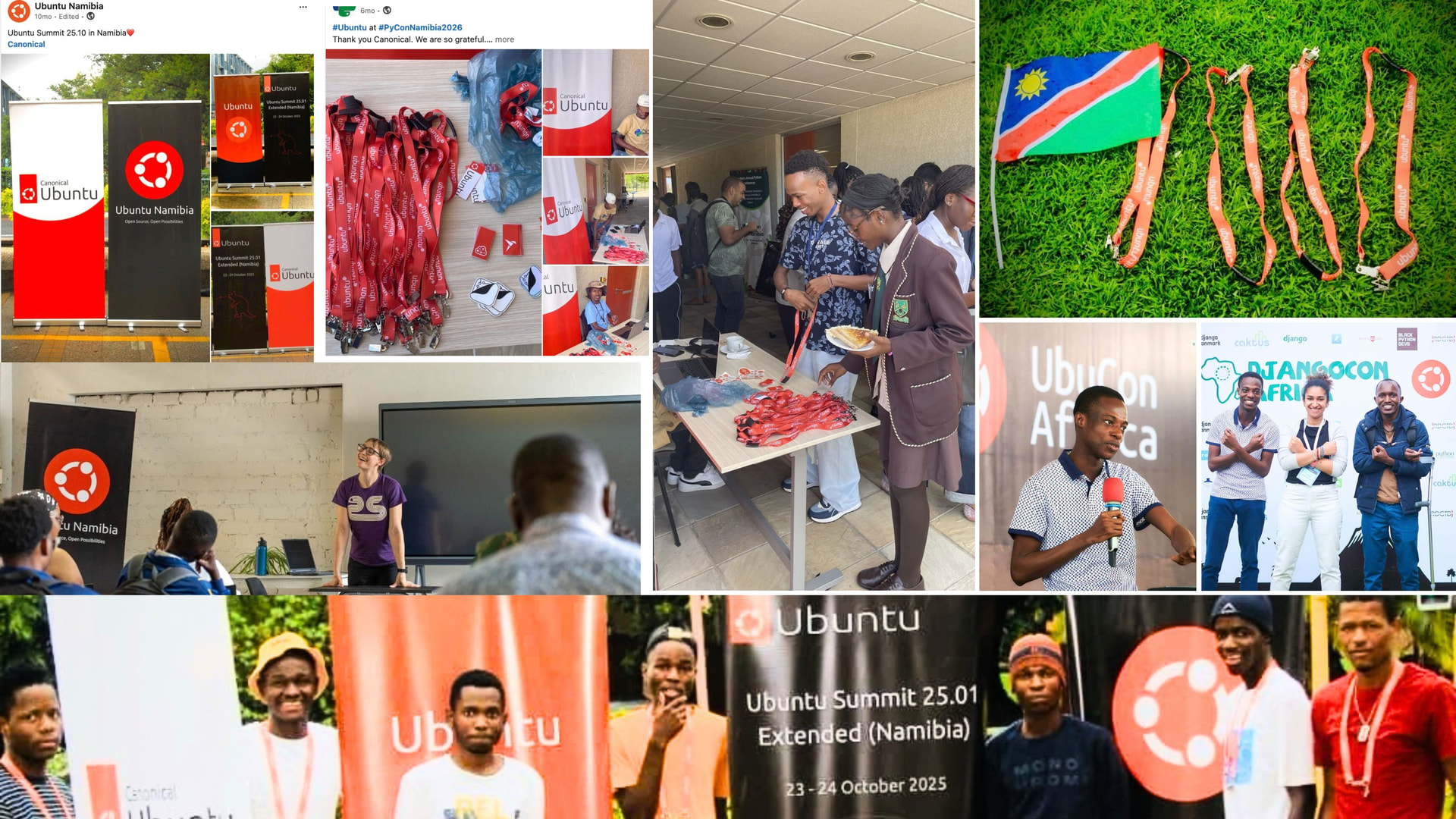
My work has also taken me into open source communities across Africa. I was part of the DjangoCon Africa organising team when we hosted the first UbuCon Africa in Tanzania, and I contributed to UbuCon Kenya. I have spoken at the Ubuntu Summit in Prague in 2022 and The Hague in 2024 about building open source communities in Africa.
Today, communities across Africa also reach out to me when they need help, and sometimes I get involved when I see a gap. It might be helping an organiser work through a problem, connecting people who can help each other, or stepping in where a community needs support.
I have also reviewed conference talk proposals for events around the world, including EuroPython. Reading what people submit gives me a good sense of what developers and communities are working on and the conversations they want to have. I am a Fellow of the Python Software Foundation and an Individual Member of the Django Software Foundation, recognised for my contributions to the Python and Django communities. These experiences have shaped how I approach open source, giving me a broader view of the people, communities and ideas that make the ecosystem work.
Why do I want to be elected?
-
Make Ubuntu part of the wider open source ecosystem. In our communities, it is the same twenty or thirty people in different communities, just wearing different shirts. I want people from other open source communities to see Ubuntu as part of the ecosystem they are already part of and feel welcome without having to leave their own communities behind. Each community has its own culture, policies, Codes of Conduct and ways of working, and I want to help create stronger connections between them so people can work with each other while respecting those differences.
-
Strengthen connections between LoCos. LoCos have a lot to learn from each other, both within regions and across the wider Ubuntu community. I would like to see stronger relationships and regional gatherings where contributors can share what works, discuss common challenges and find things they can build together. In Africa, for example, I would like to explore a continental UbuCon. Stronger connections can also help bring shared experiences and collective feedback from LoCos into Ubuntu discussions, giving Ubuntu and Canonical a clearer understanding of what communities are experiencing while respecting each LoCo’s identity and way of working.
-
Bring Ubuntu into education from an early age. Through Python conferences, we already introduce high school learners to Python and open source and give them opportunities to learn by doing. I would like to explore doing more of this with Ubuntu through schools and educational communities, so young people can experience Ubuntu beyond community events and discover open source from an early age.
-
Give people room to grow and take responsibility. People should be able to start by participating, learn from people with more experience and take on meaningful responsibilities. They should also have opportunities to understand how decisions are made, how different parts of the project work together and what it takes to take responsibility for something themselves. That could mean helping organise Ubuntu Summit, leading part of a project or taking responsibility for part of the community. This also means the work does not always fall on the same people, making community activities more sustainable and reducing the workload and burnout that can come with carrying too much alone. The knowledge gained along the way should also be documented and shared so that it remains useful when people move on.
-
Keep a strong connection between the community and Canonical. Community concerns should reach Council discussions, and decisions or changes should be communicated back to the community clearly. I would also like to see more opportunities for direct conversations between Canonical and community members.
Final thoughts
For me, community has always been about making it easier for the next person to take part, find their place and eventually help someone else. That is what I have tried to do in the communities I have been part of.
I want the next person, wherever they are in the world, to find the door already open and people on the other side who make them feel that they belong.
Thank you for building such a welcoming community.